What is industrial boilermaking layout? Practical guide for boilermakers
Discover the basic concepts of boilermaking layout and learn the essential steps to develop metal plates with precision.
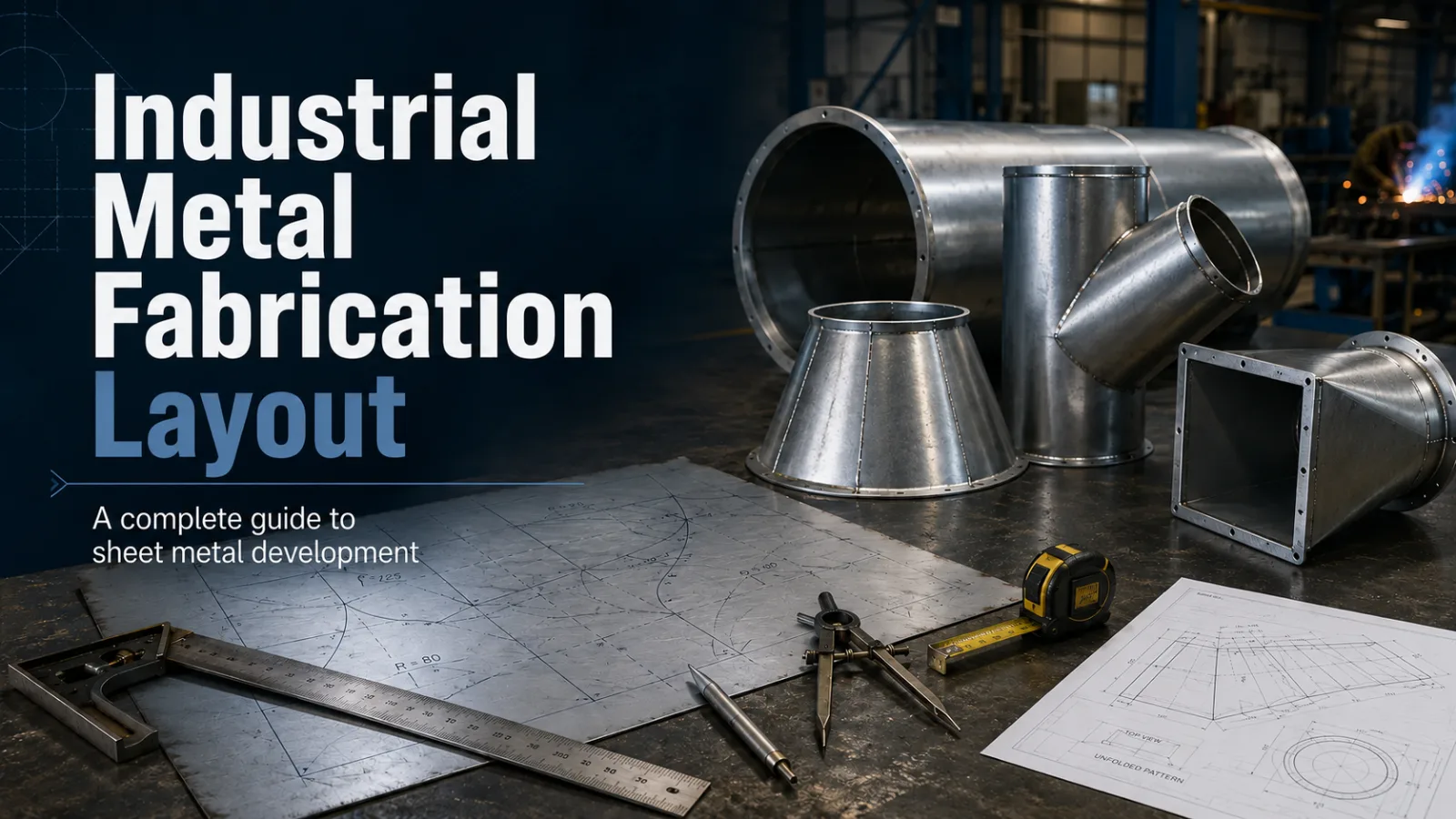
Industrial Boilermaking Layout: comprehensive guide to understand the development of plates
Introduction
Industrial boilermaking / metal fabrication is the art of transforming metal plates into three-dimensional components, such as pipes, tanks, cones and junctions.
The basis of this work is the layout / pattern development, also called plate development. It consists of representing in two dimensions the shape that the part will have after being formed.
Mastering this technique allows:
Reduce waste;
Ensure perfect fits;
Optimize manufacturing time;
Improve the accuracy of the parts;
Reduce rework in assembly.
In this guide, you will learn what industrial boilermaking layout is, which steps make up the process, and what the most common applications are.
This article serves as a pillar content. From it, you can delve into specific topics such as Y branch, eccentric cone, conical fitting and rectangle to round.
What is industrial boilermaking layout
In general, the layout is the flat drawing that represents the surface of a three-dimensional object when it is “opened” or unfolded.
To fabricate a cylinder, for example, it is necessary to lay out a rectangle whose sides correspond to the height and the perimeter of the cylinder. After cutting and forming, this plate becomes the final part.
The same principle applies to:
Cones;
Ducts;
Rectangular to circular transitions;
Joints;
Branches;
Reducers;
Special boilermaking / metal fabrication components.
In practice, the process involves geometric and trigonometric calculations to determine the exact dimensions of the plates, as well as the use of tools such as compasses, rulers, protractors and modeling software.
The result is a pre‑cut part that fits perfectly after bending or welding, minimizing rework.
Why layout is important
Layout is one of the most important stages of industrial boilermaking / metal fabrication, as it directly influences the quality, cost and efficiency of production.
Dimensional accuracy
The quality of a tank, pipe or flange depends directly on the layout / pattern development.
An incorrect development can cause:
Clearances;
Deformations;
Poor fit;
Difficulty in welding;
Loss of alignment during assembly.
Cost reduction
Poorly laid out plates increase material waste.
Good planning allows better utilization of raw material, reduces waste and avoids incorrect cuts.
Manufacturing agility
With the correct layout in hand, the cutting and forming team saves time and reduces the number of adjustments during assembly.
This makes the process faster, more organized and predictable.
Safety and compliance
Parts manufactured based on precise layouts better meet technical standards and better withstand pressures, mechanical loads, and operating conditions.
Step-by-step layout for boilermaking / metal fabrication
For any part, the layout process follows a logical sequence.
The steps may vary depending on the component type, but they usually follow the flow below.
1. Measurement
Collecting the dimensions of the part to be fabricated is the first step.
This step may include:
Diameters;
Heights;
Inclination angles;
Plate thickness;
Radii;
Lengths;
Tolerances;
Fit points;
Actual installation conditions.
In existing installations, measurements can be taken directly on site.
In new projects, they usually come from the technical drawing or the 3D model.
2. Calculation and flat pattern development
With the measurements in hand, the flat pattern development of the part is calculated.
For cylinders, for example, the length of the plate corresponds to the perimeter:
C = 2πr
For cones, the arcs of the circular sector are determined.
For transitions, methods such as:
Triangulation;
Parallelogram;
Division by generators;
Development by radial lines;
Development by parallel lines.
Tools such as spreadsheets, CAD software and ready-made tables help in this stage.
3. Layout on the plate
After the calculation, the drawing is transferred to the metal plate.
In this step, the following can be used:
Scribers with steel tip;
Industrial chalks;
Specific markers;
Rulers;
Compasses;
Squares;
Measuring tapes;
Transfer gauges.
The objective is to ensure perpendicularity, alignment and accuracy in the markings.
The outline of the development must be marked carefully, including:
Cut lines;
Bend lines;
Reference points;
Fit lines;
Assembly marks.
4. Cutting
With the layout completed, the plate is cut.
Depending on the thickness and material type, the following can be used:
Manual shears;
Guillotines;
Saws;
cutting torch;
Plasma CNC;
Laser cutting;
Waterjet cutting.
It is important to follow the cut lines precisely so as not to compromise the later fit.
5. Forming and assembly
The cut parts are then bent, rolled or calendered to acquire the three‑dimensional shape.
After that, the parts can be joined by:
Weld;
Rivets;
Screws;
Flanges;
Mechanical fittings.
During forming, it is constantly checked whether the final dimensions match the design.
A correct layout facilitates assembly, ensures aligned welds and prevents unwanted stresses in the final part.
Applications and part types
Various industrial components depend on specific layouts.
Below are some common examples in industrial boilermaking / metal fabrication.
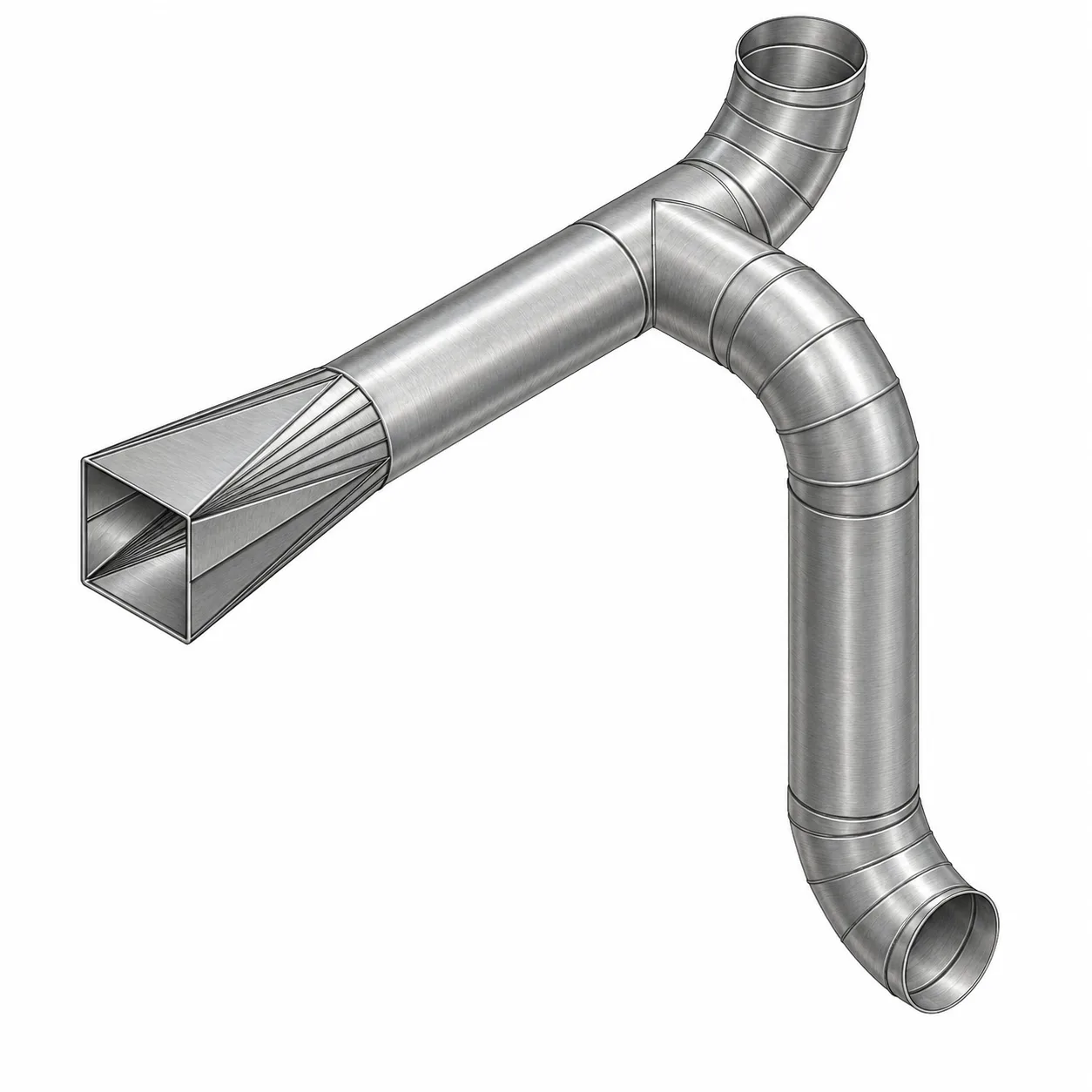
Y Branch
The Y branch is used in pipe and exhaust systems to split or combine flows.
Your development requires combining two cylinders at defined angles, creating flanges that fit perfectly onto the main pipe.
This type of part is common in:
Ventilation systems;
Industrial exhaust fans;
Metallic pipework;
Air ducts;
Systems for transporting gases or particles.
Soon, we will publish a dedicated article showing how to calculate and lay out a Y branch.
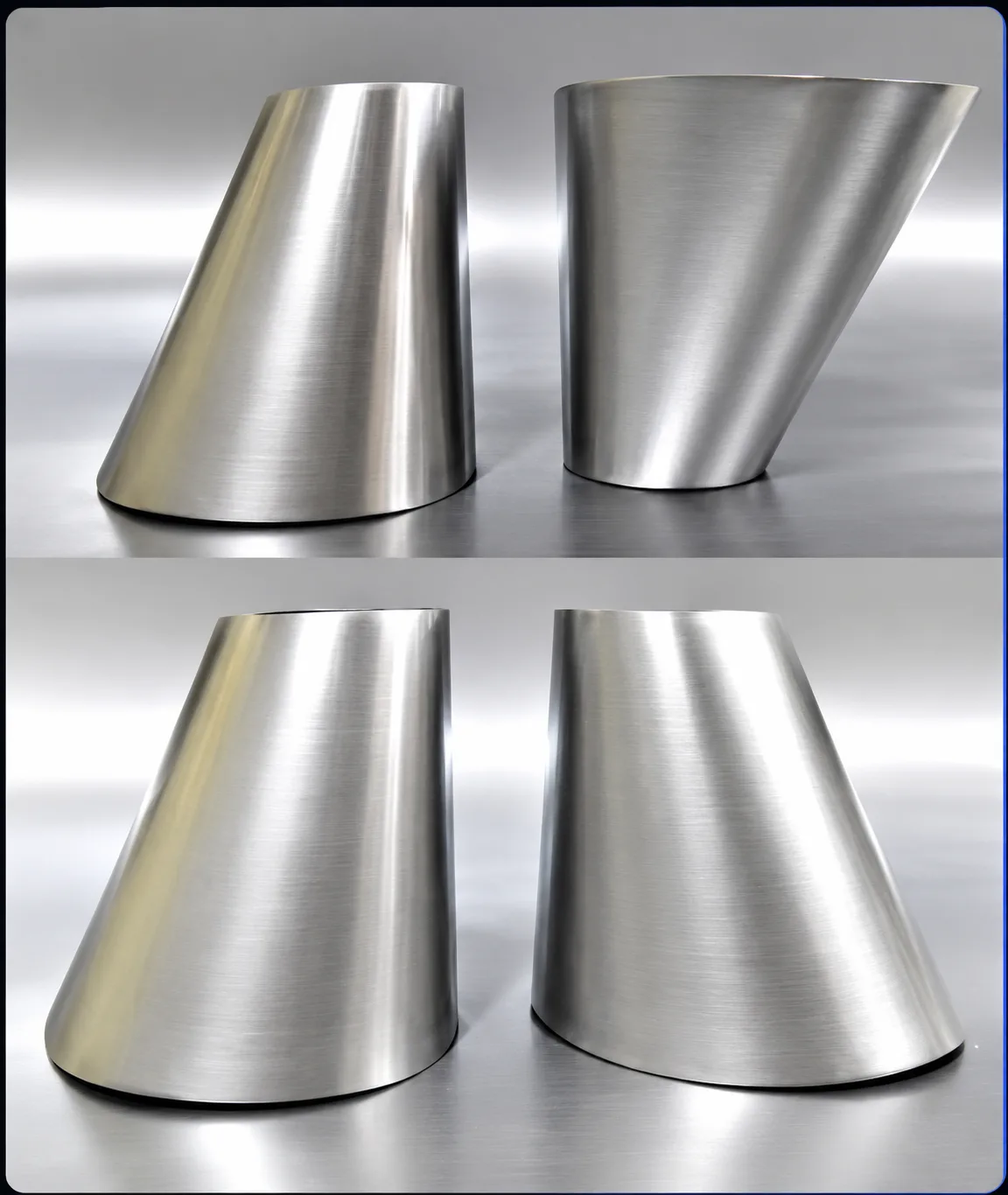
Eccentric cone
The eccentric cone connects two cylinders of different diameters whose central axis is not aligned.
The development uses circular sectors with variable and offset radii.
This part is common in:
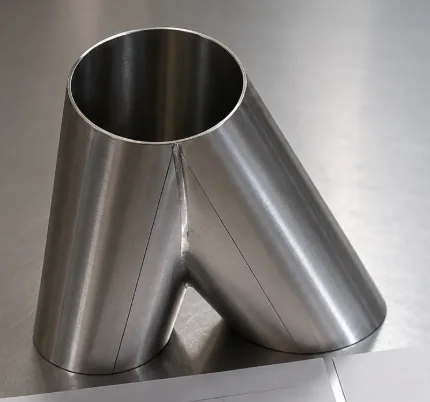
Conical fitting
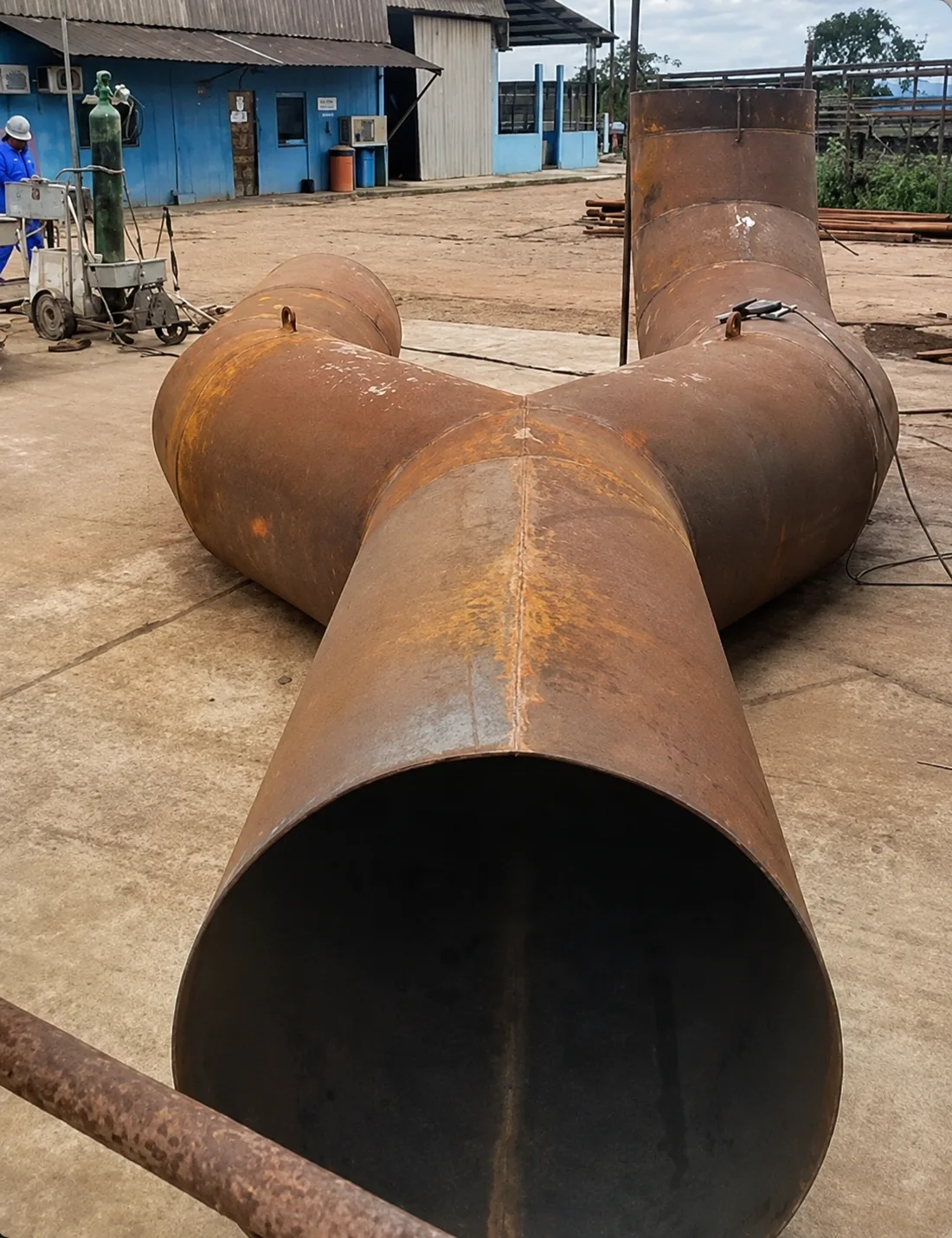
The conical leg is a “trouser”-shaped branch, with two outlet pipes and one inlet pipe.
The layout combines two truncated cones connected to a cylinder.
This component appears in:
Collectors;
Industrial ventilation systems;
Branching ducts;
Exhaust systems;
Special pipelines.
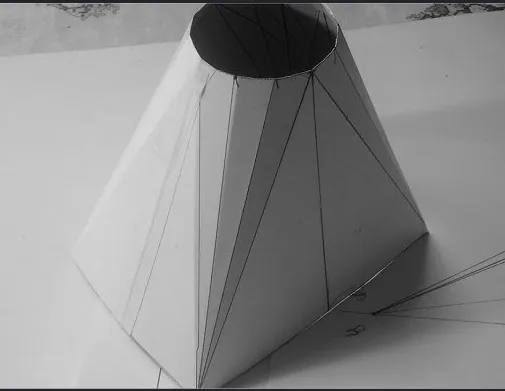
Rectangle to round
Also called rectangular‑circular transition, this element connects pipes of different sections.
The layout involves the interpolation of lines and curves to transform a rectangle into a circle.
It is essential in:
Ventilation systems;
HVAC ducts;
Boilermaking / metal fabrication of ducts;
Exhaust fans;
Adaptations between industrial equipment.
Conclusion
The layout of industrial boilermaking / metal fabrication is the foundation of any part fabricated from metal plates.
Understanding its logic and mastering the steps of measurement, calculation, layout, cutting and assembly allows producing parts with precision, reducing costs and avoiding rework.
Throughout this blog, you will find comprehensive guides for each type of component mentioned here, with practical examples and step‑by‑step instructions.
If you want to dive deeper, follow the upcoming articles on:
Y branch;
eccentric cone;
Conical fitting;
Rectangle to round.
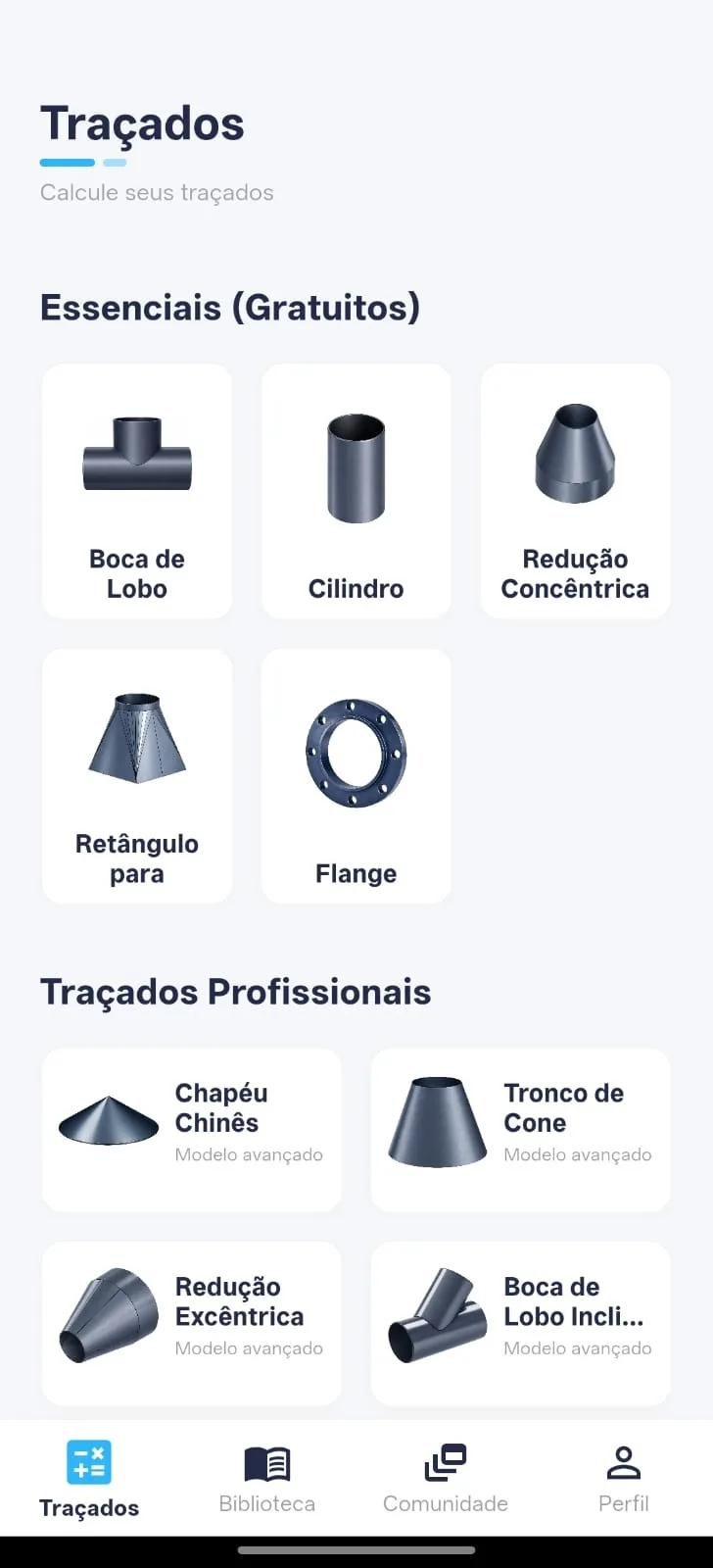
Carry TraceClub in your pocket
Boilermaking layouts, calculations and technical manuals in the palm of your hand — fast, accurate and always with you in the shop or in the field.
- Available for iOS and Android
- Works offline
- PT · EN · ES